Finding a container supplier that offers a good price may seem like a simple decision; however, the problem appears when the company needs to increase its orders, maintain consistent quality or respond quickly to a change in demand.
At that point, the question stops being how much does each container cost? and becomes: Can this manufacturer really support my operation?
For a purchasing manager, choosing the right container manufacturer not only impacts the budget; it can also affect inventories, production, response times and the ability to deliver to customers. That is why, before selecting a manufacturer of industrial containers, it pays to analyze much more than price.
Don't evaluate price alone
A low price may look attractive in a quote, but it does not necessarily represent the lowest cost for the company.
If differences between batches, quality problems, parts that do not work properly in the filling process or difficulties obtaining product appear later, the initial savings can disappear.
That is why, when comparing industrial containers, it is important to consider the total cost of the operation: price per piece, quality and consistency, availability, supply conditions, capacity to handle the required volumes, compatibility with the process and possible costs from rejects or waste.
The cheapest manufacturer does not always represent the lowest cost for your operation.
Make sure the manufacturer can keep pace with your growth
A company may start by buying relatively small quantities and later increase its volumes. The problem arises when the supplier that worked for a small operation lacks the capacity or structure to respond to growth.
Before making a decision, ask: What happens if my demand increases?
A container manufacturer should be evaluated not only on what it can deliver today, but on its ability to become a reliable supplier as your company's needs evolve.
This is especially important in the industrial sector, where a container shortage can directly affect the continuity of other activities.
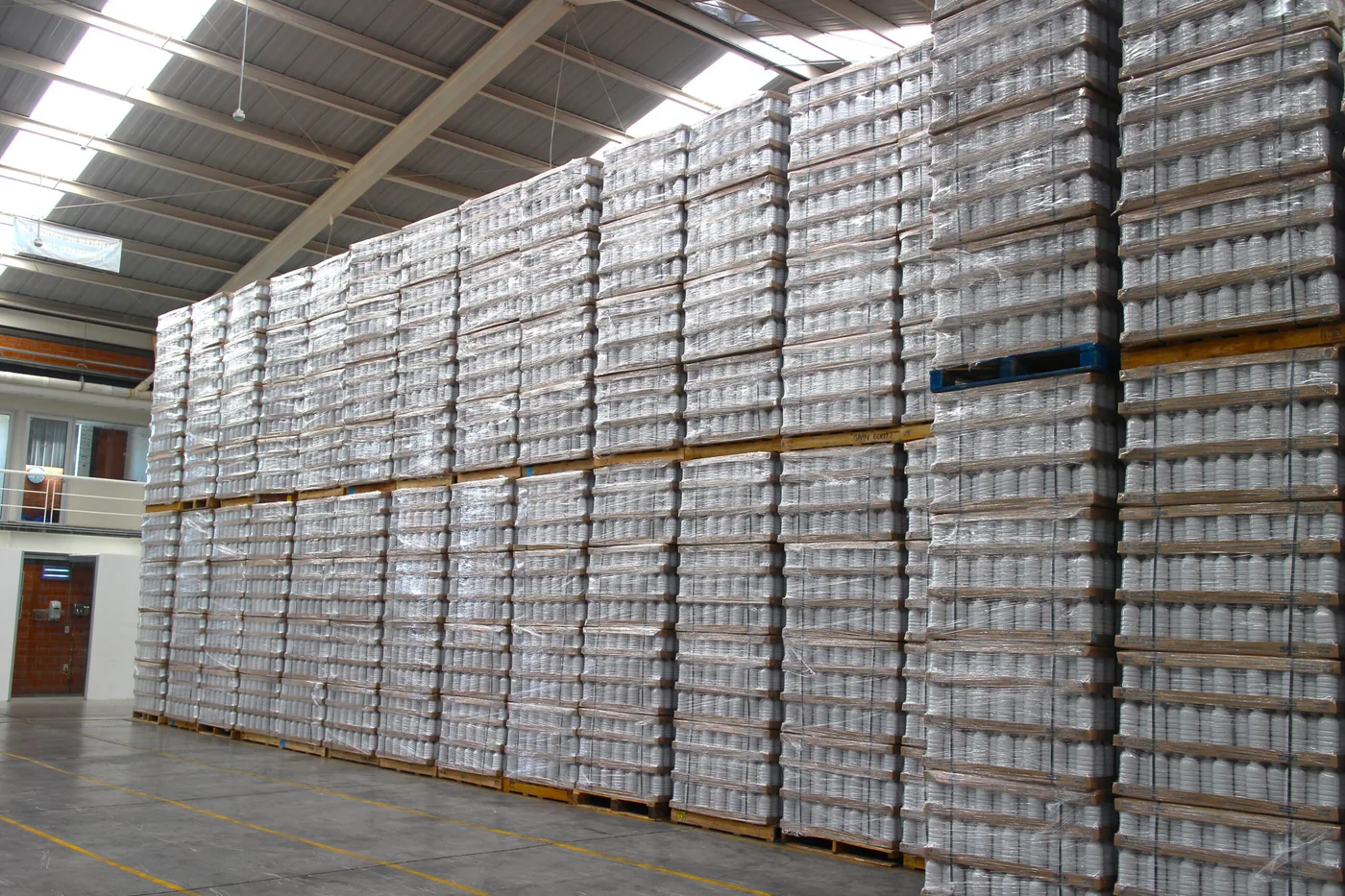
Consistency matters as much as availability
When a company works with different batches of containers, variations can cause problems during filling, capping, storage or handling. That is why, when evaluating a container factory, it is not enough to ask whether it can produce the model you need.
You should also know how it controls its process and how it maintains the consistency of its products. Quality should not depend on which batch you received this week.
Having a consistent product is as important as having availability.
Evaluate the manufacturer as part of your supply chain
The container may seem like a secondary component compared with the product it holds, but if it is not available when needed, it can become a bottleneck. That is why purchasing should analyze the supplier considering the impact a supply interruption would have.
How important is this manufacturer to my operation? What would happen if the order does not arrive when it is needed? Can it respond to increases in demand? Does it have a manufacturing structure that allows it to maintain supply? Is there enough communication to plan future needs?
These questions help move from a relationship based solely on purchase orders to a more solid sourcing strategy.
Review technical capability, not just commercial capability
A good manufacturer should not limit itself to receiving an order and delivering parts. It must understand that the container has to respond to the specific needs of the product and the operation.
In industrial applications, factors such as material, capacity, design, closure and application can be relevant in determining whether a solution is suitable. Working directly with a container manufacturer can make it easier to evaluate alternatives and communicate technical requirements.
What should purchasing look for in a container manufacturer?
Before selecting a manufacturer, it is important to evaluate five fundamental aspects: its manufacturing capacity to handle current and future volumes; the quality and consistency of its products; the ability of its containers to meet the needs of the application; the reliability of its supply; and its ability to communicate in order to understand requirements and anticipate needs.
The goal is not simply to find a company that sells containers, but to find a manufacturer that reduces the uncertainty in your supply.
Choosing a supplier is also a risk decision
When you buy containers for an industrial operation, price is only one part of the decision. The real question is: How much risk are you adding to your supply chain with each supplier?
Having a manufacturer that understands your requirements, maintains consistency in its products and can keep up with the needs of your operation lets you make sourcing decisions with greater perspective.
At Plastimex we manufacture container solutions in PET and HDPE for companies in different industrial sectors such as chemical, agrochemical, cleaning, cosmetic, automotive and veterinary. Our approach as a Mexican manufacturer is to understand the needs of each application and offer alternatives that meet the requirements of the operation.
In addition, we have a quality management system certified under ISO 9001:2015, focused on controlling our manufacturing processes.
The best choice is not necessarily the cheapest supplier, but the one that can offer a suitable solution for your product and respond consistently to the needs of your operation.
Before making a decision, evaluate not only how much the container costs, but how reliable the manufacturer behind it is.
If you are evaluating suppliers or need an industrial container solution for your product, explore our PET and HDPE solutions and find an alternative that fits the needs of your operation. Contact us.

This site needs JavaScript for the full experience (quote builder, filters,
gallery). Email us at
atencion.clientes@plastimex.mx
or call +52 55 5276 2977.