A difference of a few cents per container may seem enough to choose between two suppliers, but what happens when the selected container does not work properly with the product, the filling process or the closure system?
The problem is no longer the purchase price; it turns into reprocessing, product on hold, waste, returns, line stoppages or even batches that can no longer be sold. For a purchasing manager, choosing a container should not be just a comparison of prices per piece, but a decision about how much risk is being added to the operation.
The true cost appears after the purchase
Suppose a company finds a cheaper container and decides to switch suppliers. At first glance, the decision seems to represent savings; however, if compatibility problems with the product or the production process appear later, costs that were not included in the quote can arise:
- Adjustments or reprocessing.
- Wasted product.
- Batches on hold.
- Line stoppages or adjustments.
- Replacement or restocking of components.
- Returns of finished product.
- Additional logistics costs.
- Staff time spent resolving the incident.
- Delays in deliveries to the customer.
The container may represent a fraction of the product's total cost, but a problem related to it can affect a much larger operation.
Where can an incompatibility appear?
Not all problems are detected when the containers are received. An incompatibility can become evident at different stages of the process.
During filling: The design or characteristics of the container may not respond adequately to the line conditions, causing difficulties during the process.
With the product: Depending on the application, it is necessary to consider the interaction between the contents and the container material. Different industries may have specific requirements related to strength, performance and application.
In the closure: The container and the cap must work as a system. An incorrect selection can cause fit, sealing or performance problems that later affect the finished product.
During storage and transport: A container must not only work when it leaves the line. It must also withstand the conditions it will be exposed to during storage, handling and distribution.
Evaluating only a visual sample before making a major purchase may not be enough.
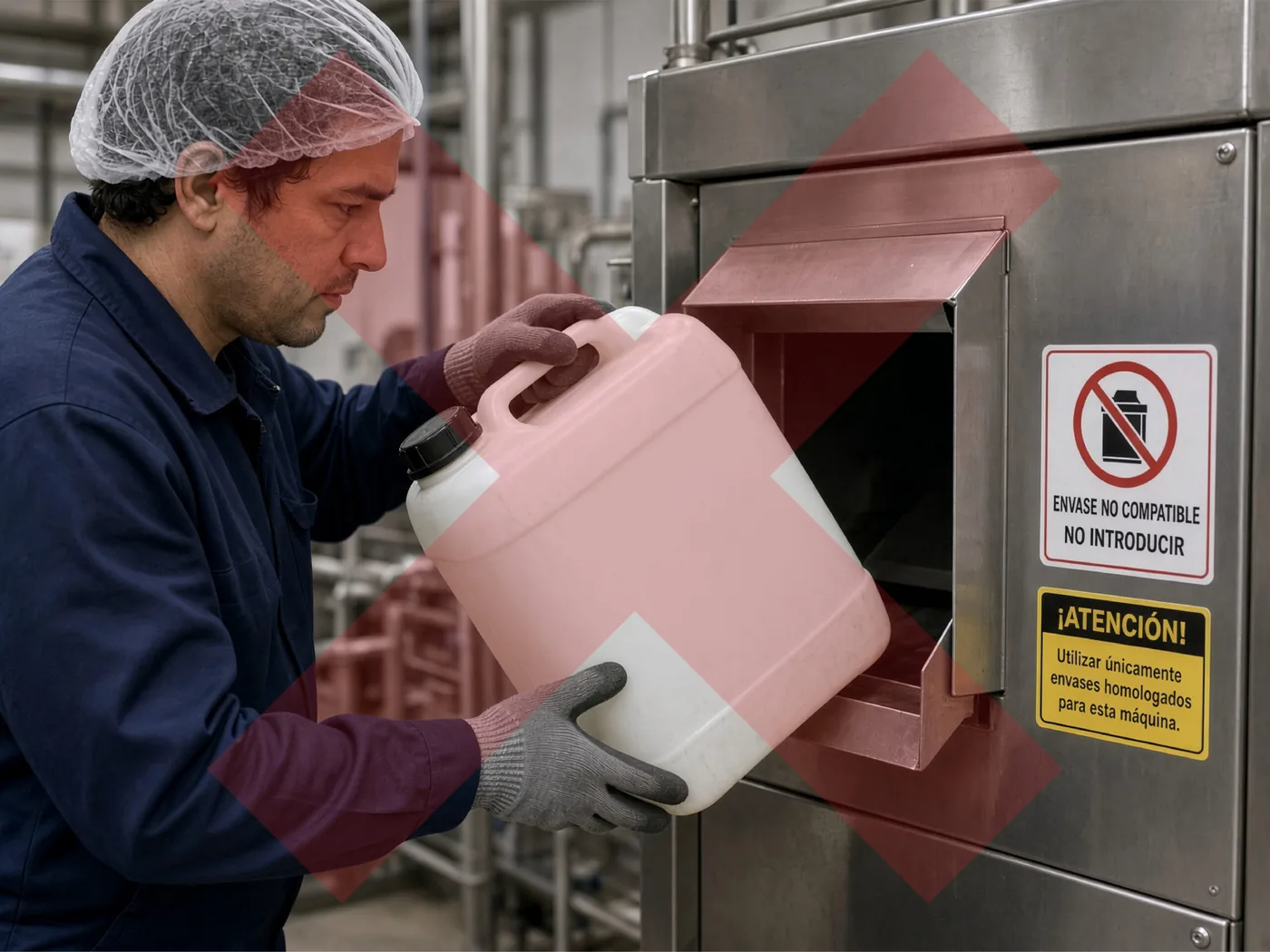
Purchasing's mistake: comparing price per piece only
When Purchasing receives several quotes, it is normal to start with price. The problem appears when price becomes the main decision criterion.
Two containers may look equivalent in a quote and behave very differently once they are incorporated into an operation. That is why, before choosing a supplier, it is worth asking:
- Is this container suitable for my product?
- Is it compatible with my filling and capping process?
- What requirements must it meet for my application?
- Can the manufacturer maintain consistency between batches?
- What validations do I need to carry out before scaling up the purchase?
These questions can prevent a saving on the purchase from turning into a much greater cost for the company.
Before switching manufacturers, validate the complete system
When a company evaluates a new container manufacturer, it should not only validate that the part has the right dimensions. It is important to analyze the whole:
product + container + closure + process + storage + distribution
The right solution will depend on the specific application. Before making a high-volume purchase, it is advisable to carry out tests and validations that make it possible to identify potential problems before rolling the change out to all of production.
This is especially important for products that already have an established operation: the cost of discovering an incompatibility after producing a full batch can be considerably higher than the cost of validating it beforehand.
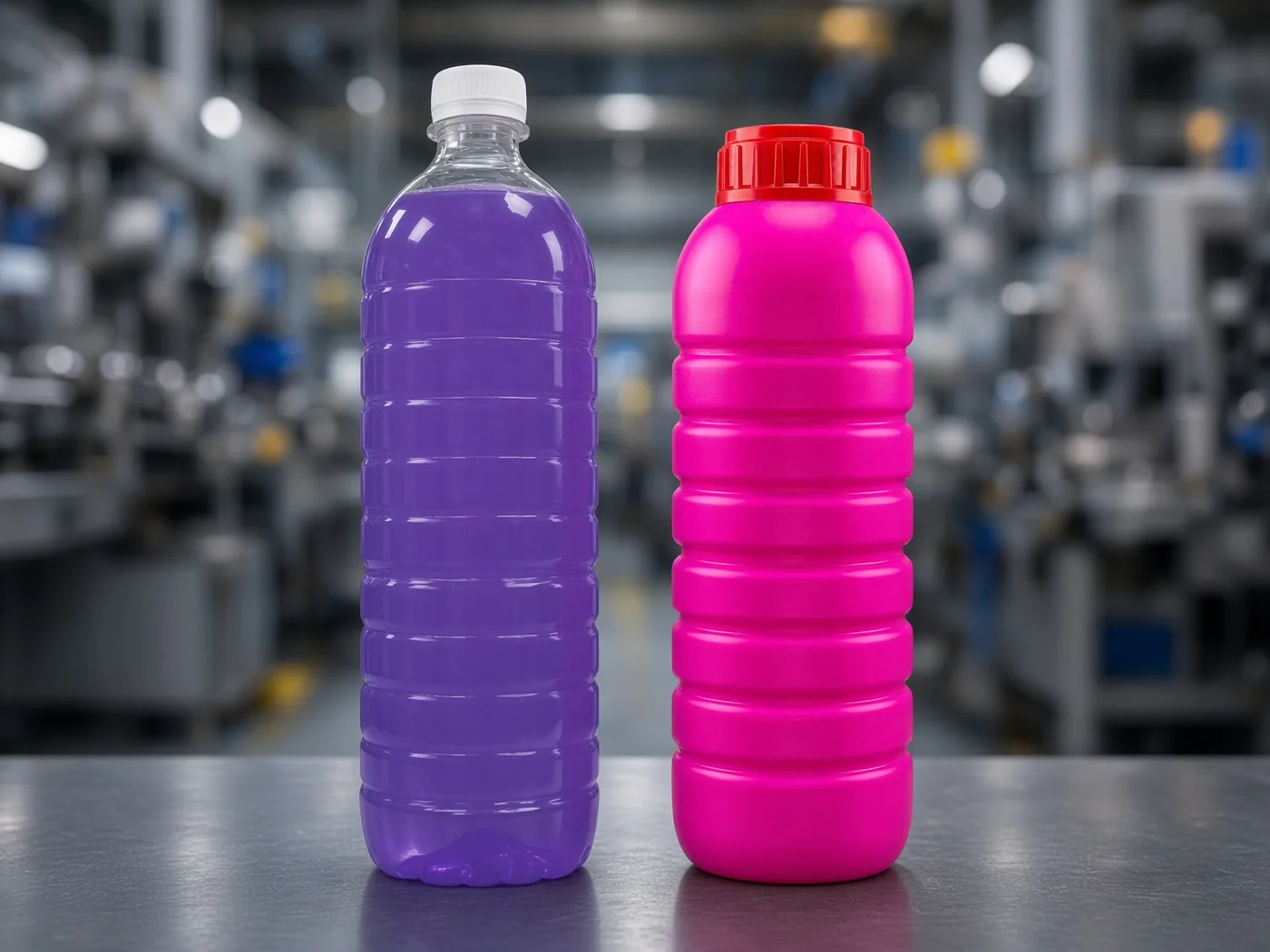
PET or HDPE: the material must fit the application
The choice between PET and HDPE should not be made solely on appearance, availability or price either. Each application has particular needs, and the material, design, capacity and closure system must be evaluated according to the product and process.
Working directly with a container factory can make the technical conversation easier from the earliest stages of selection. The goal is not simply to find a part that “fits” on the line; it is to find a solution that works within the operation it was designed for.
How to reduce risk before buying?
Before approving a new container, Purchasing can rely on a simple checklist:
- Define the application: What product will it hold and under what conditions will it be used?
- Check compatibility: Evaluate material, design, capacity and closure system according to the application.
- Test before scaling up: Carry out the necessary validations before turning a purchase into a significant volume.
- Evaluate the manufacturer: Don't just look at price. Consider its technical capability, quality processes and experience.
- Calculate the cost of risk: Ask yourself how much a return, a reprocess or a lost batch would cost your company.
This last point changes the conversation. It is no longer about finding the cheapest container, but about finding the solution that represents the best balance between cost, performance and operational risk.
The best container is the one that works within your operation
An incompatible container may seem like a small problem until it affects an entire batch. That is why the purchasing decision must begin long before comparing prices: it must begin by understanding what the operation really needs.
At Plastimex we manufacture container solutions in both PET and HDPE for different industries and applications. As a Mexican manufacturer, we can support the evaluation of a solution considering the specific needs of each project.
Choosing a container should not just mean buying a part, but reducing the risk that this part ends up costing your company much more.
Before making a high-volume purchase, review the solution with a specialized manufacturer. Talk to us and learn about our options focused on quality, consistency and production capacity.
Every product has a different need, and the right container must respond to it. Contact us.

This site needs JavaScript for the full experience (quote builder, filters,
gallery). Email us at
atencion.clientes@plastimex.mx
or call +52 55 5276 2977.